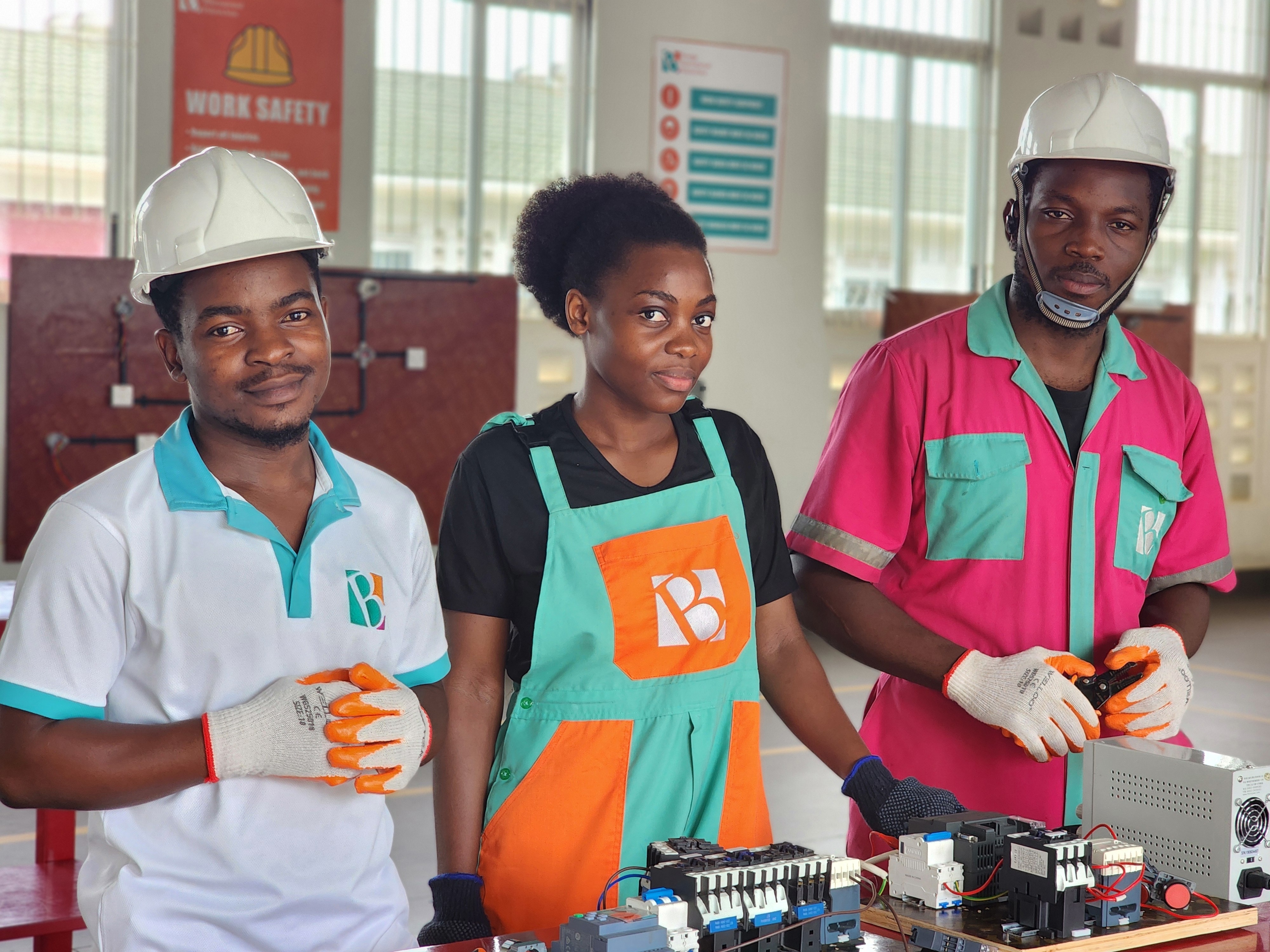
As Busoga International Polytechnic prepares for its graduation ceremony on 28 November 2026, we continue our BIP Graduates 2026 series by meeting three students completing their studies in Construction and Building.
For Tariq Qatada, Tariq Ehaab and Wankya Gerald Muwanika, reaching graduation represents more than earning a qualification.
It reflects the practical skills they have developed, the challenges they have worked through and the progress they have made towards careers in the construction industry.
🎓 A Step Forward, Not the Finish Line
Each student sees graduation slightly differently.
For Gerald, it is one of many steps towards achieving success in his career.
Ehaab views graduation as recognition of what can be achieved through personal effort.
For Qatada, it represents the dedication and hard work invested throughout his training.
Although their perspectives are different, they share an important idea:
Graduation is not the end of their journey.
It is a foundation they can continue building on through further study, practical experience and professional development.
🧱 From Beginners to More Confident Construction Students
Looking back, the three students are particularly proud of how much their practical ability has developed.
They did not arrive at BIP already knowing how to carry out construction work.
They had to learn.
Over the course of their training, they gained exposure to different parts of the construction process, including design concepts, carpentry and building construction.
That experience helped them understand more clearly how an idea or drawing eventually becomes something physical.
A building begins with planning and technical information, but bringing that plan to life requires measurements, materials, practical skills, correct procedures and people who understand what they are doing.
Learning to connect those different stages has been an important part of their time at BIP.
For Gerald, however, the experience was not only technical.
He also values the friendships and social connections he developed during his studies, describing them as an important part of his overall experience and personal growth.
🔨 Learning Construction by Doing It
One of the strongest themes in their reflections is the importance of practical training.
Construction cannot be understood fully from a textbook alone.
Students need opportunities to work with materials, tools, drawings and practical tasks so they can see how construction principles operate outside the classroom.
At BIP, that exposure helped the students discover that construction is much broader than simply putting up buildings.
Their training introduced them to areas such as design, carpentry, building methods and evolving construction techniques.
Gerald particularly appreciated learning more about the relationship between design ideas and modern construction methods.
For Ehaab and Qatada, practical training also gave them greater exposure to contemporary approaches to construction while helping them build competencies they can continue developing after graduation.
📐 Understanding the Bigger Construction Process
Practical construction involves many connected skills.
Before work begins, someone needs to understand the design.
Measurements need to be correct.
Materials need to be used appropriately.
Different parts of a structure must come together properly.
Different trades may also need to coordinate their work.
Through their training, the graduates have had opportunities to see construction from more than one perspective.
Learning carpentry, building techniques and design concepts helps students understand that each individual task forms part of a much larger project.
That broader understanding becomes increasingly valuable as they progress into further study and eventually take on more responsibility in the industry.
🌱 Growing Through the Difficult Parts
Their time at BIP was not without challenges.
For Ehaab and Qatada, one of the early difficulties was adapting to a new and diverse social environment.
Meeting new people and forming connections did not happen immediately.
But through classes, practical sessions and shared experiences with other students, they gradually became more comfortable and developed meaningful relationships within the BIP community.
Gerald faced a different challenge.
He began his studies with limited practical construction knowledge and experience.
For him, progress came gradually.
Through consistency, determination and a willingness to keep learning, he developed greater practical ability and confidence as his studies continued.
Their experiences show that progress during technical education is not always immediate.
Sometimes it comes from practising a skill repeatedly.
Sometimes it comes from asking for help.
And sometimes it simply comes from staying committed long enough to recognise how much you have improved.
👷 The Trainers Who Helped Them Progress
As graduation approaches, the students are also thinking about the people who helped them reach this point.
They express their appreciation to their trainers for their patience, guidance and willingness to share both technical knowledge and industry experience.
A trainer's role in technical education goes beyond explaining theory.
Students also rely on trainers during practical sessions to demonstrate techniques, correct mistakes, answer questions and help them understand why a particular method is used.
For Qatada, Ehaab and Gerald, that support played an important part in developing the competencies they now carry forward.
They also thank their parents and guardians for the encouragement and support they received throughout their studies.
Graduation may recognise the achievement of the individual student, but the journey often involves many people along the way.
🚧 What Comes Next?
For all three graduates, education will continue beyond this graduation.
They intend to pursue further studies to expand their knowledge and professional capabilities.
Gerald is also interested in gaining more direct industry exposure through internships and practical work experience.
That next stage will allow him to apply what he has learned at BIP while continuing to understand how construction operates in real working environments.
Their approach reflects an important reality about technical careers:
A qualification provides a foundation, but experience continues to build the professional.
Every new project brings different conditions, people, problems and opportunities to learn.
💬 Their Advice to Students Coming Behind Them
When asked what they would tell current and future students, their message is straightforward:
Stay focused and make use of the opportunities available to you.
Gerald encourages students to recognise what BIP provides and commit themselves fully to learning.
Qatada similarly advises students to remain focused and take advantage of the opportunities they have during their training.
That includes more than attending classes.
It means making use of the workshop.
Practising.
Asking questions.
Learning from trainers.
Working with classmates.
And taking practical sessions seriously.
The opportunity to learn is most valuable when students actively use it.
🎉 Congratulations to Our Construction and Building Graduates
For Tariq Qatada, Tariq Ehaab and Wankya Gerald Muwanika, graduation marks the completion of one stage and the beginning of another.
They arrived with different levels of experience.
They encountered different challenges.
And through practical training, study and persistence, they leave with stronger technical knowledge, greater confidence and a clearer understanding of the construction field.
Their next steps may involve further education, internships and eventually professional work.
But the foundation has already been laid.
Congratulations to Tariq Qatada, Tariq Ehaab and Wankya Gerald Muwanika as they prepare to graduate on 28 November 2026.
We look forward to celebrating this milestone with them as part of the BIP Graduates 2026 class.